
Bridge Rush
Dos equips. Un barranc. El teu xat tria bàndol i construeix el pont.


Sobre aquest joc
Bridge Rush és una cursa 1 contra 1 a pantalla partida. Dos capitans són a la vora d'un barranc sense fons —el vermell a la meitat esquerra de la pantalla, el blau a la dreta— i avancen col·locant taulons d'un en un. El número gran de sobre cada meitat és simplement quants taulons ha col·locat aquell equip, així que també indica la distància recorreguda. El primer que arriba al tauló de l'objectiu guanya la ronda.
El que el converteix en un joc per a directes és que cada regal pertany a un equip. El teu públic no envia regals al joc, sinó a un bàndol: taulons per al vermell, un esprint per al blau, una congelació que atura el constructor de l'altre carril o un sabotatge que li fa saltar els taulons de sota els peus. Un regal que val cinc taulons no és un teletransport: el constructor els col·loca tots cinc un rere l'altre, cadascun amb el seu impacte, així que un regal gros és un espectacle i no un salt en un número.
Pots controlar tots dos capitans amb el teclat, canviar el nom i el color dels dos equips en directe i decidir quants taulons calen per guanyar. Tot el que decideix la cursa és propietat del servidor de ScrollPlay: la llavor del recorregut amb què es generen les dues meitats, les dues puntuacions, el que val cada regal i quin bàndol ha creuat primer. La diferència que veuen els teus espectadors és la real.
Característiques
1 contra 1 a pantalla partida
Dues vistes completes amb càmera de persecució en un sol llenç: el vermell a l'esquerra, el blau a la dreta, totes dues en directe alhora
El teu xat tria bàndol
Cada regal està vinculat a un equip, així que el públic es divideix en dos i competeix entre si
Posa nom als teus equips
Canvia el nom i el color dels dos bàndols en ple directe, sense recarregar, sense reiniciar i sense reconstruir res
Cursa verificada al servidor
La llavor del recorregut, les dues puntuacions, el valor de cada regal i la victòria venen del servidor de ScrollPlay
Com s'hi juga
- 1
Obre ScrollPlay
Juga en un navegador compatible a Windows, Mac, iPhone/iPad o Android, o fes servir el llançador d’escriptori per a Windows.
- 2
Inicia la sessió
Crea un compte o entra-hi amb les teves credencials
- 3
Posa nom als equips
Tria el nom i el color dels dos equips i després explica al xat quin regal és de cada bàndol
- 4
Comença la cursa
Tria quants taulons guanyen la ronda i deixa que les dues meitats del teu públic s'ho juguin
Regals del públic
Construeix per a l'equip vermell
- Rose
- deixa caure taulons que el constructor vermell col·loca d'un en un
- Rosa
- impuls de velocitat — una tirada de taulons col·locats de pressa, i el vermell esprinta
- Doughnut
- congela el constructor blau uns quants segons
- Gold Boxing Gloves
- sabotatge — arrenca taulons de sota el blau
Construeix per a l'equip blau
- TikTok
- deixa caure taulons que el constructor blau col·loca d'un en un
- Finger Heart
- impuls de velocitat — una tirada de taulons col·locats de pressa, i el blau esprinta
- Hand Hearts
- congela el constructor vermell uns quants segons
- Confetti
- sabotatge — arrenca taulons de sota el vermell
Aquests són els regals vinculats a cada equip d'entrada, i les dues escales de preus són tan equivalents com permet la llista de regals de TikTok: una cursa en què els taulons d'un equip costen més que els de l'altre està decidida abans de començar. Cada valor és propietat del servidor, que el valida, i els streamers poden reassignar qualsevol regal a qualsevol dels dos equips, o crear accions personalitzades, des de Studio Mode.
Jugabilitat: una cursa que el teu xat corre, no mira
La majoria de jocs interactius per a directes donen al públic una palanca i un objectiu. Bridge Rush els en dona dos de cada. Com que cada regal pertany a un bàndol, el xat deixa de ser una sola multitud que ajuda o entorpeix un jugador i es converteix en dues multituds que competeixen entre si, i l'streamer, que porta tots dos capitans, és l'arena i no el rival.
El pont és la tensió. Un capità no pot avançar mai més enllà del pont que ha construït: trepitja el tauló que acaba de col·locar, així que el buit que té al davant sempre és el que separa aquell equip de l'objectiu. Els taulons tanquen el buit, un sabotatge el torna a obrir i una congelació simplement atura les mans d'un bàndol mentre l'altre continua construint.
Fet per a TikTok Live
Bridge Rush funciona a ScrollPlay, al navegador o al launcher de Windows, amb connexió en directe amb el teu stream de TikTok. El joc es nega a arrencar sense una sessió verificada, i és el servidor —no la finestra del joc— qui controla la llavor del recorregut amb què es generen els dos carrils, els dos recomptes de taulons, el valor de cada regal i la victòria, amb un nonce de sessió a cada acció.
Això importa més en un joc de dos bàndols que en un d'un sol bàndol: altrament, un client manipulat podria donar avantatge a un equip, i la gràcia del format és que les dues meitats del teu públic es fiïn de la diferència entre els números. Són els números del servidor.
Bridge Rush: preguntes freqüents
He de pagar per Bridge Rush?
Bridge Rush està inclòs al Play Pass de ScrollPlay, així que no és un dels títols gratuïts. Baixar el launcher i iniciar la sessió no costa res, i els espectadors només necessiten l'app de TikTok des de la qual ja miren el directe. DEFUSE!, Jello Merge i Jaywalkin' són els jocs gratuïts si vols aprendre el format abans de subscriure't.
Què fan exactament els regals de TikTok a Bridge Rush?
Els regals estan vinculats a un equip, no al joc, així que el teu xat es divideix en dos. Les accions integrades són taulons (tres taulons per a aquell equip), un impuls (vuit taulons col·locats de pressa, amb el constructor esprintant), un sabotatge (cinc taulons arrencats de sota l'altre bàndol) i una congelació (tres segons en què l'altre carril no pot col·locar res). Un regal gros mai no és un teletransport: el constructor col·loca d'un en un tots els taulons que ha comprat, cadascun amb el seu impacte.
Els espectadors poden destrossar el pont de l'altre equip?
Sí, per a això precisament serveix l'acció de sabotatge: arrenca taulons de sota el constructor rival, i el cop fa que aquell bàndol ensopegui a més de perdre els taulons. El sabotatge té expressament un preu inferior al de l'impuls, perquè ajudar el teu equip ha de valer més que perjudicar l'altre; si no, cap dels dos ponts s'acabaria construint. La congelació és l'altra manera de frenar el rival: atura la cua de col·locació de l'altre carril, però els regals continuen arribant al bàndol congelat i tots els pendents es col·loquen de cop tan bon punt s'acaba l'aturada.
Què necessito per fer servir Bridge Rush al meu directe?
Obre Web Launcher a Windows, Mac, iPhone/iPad o Android, o fes servir el launcher d'escriptori per a Windows. Inicia la sessió, tria un joc i connecta el teu TikTok LIVE a Studio. En un ordinador, captura la finestra del navegador o del joc; al mòbil, comparteix la pantalla amb les opcions d'emissió disponibles per al teu compte de TikTok. Aquest joc requereix un Play Pass actiu. Els espectadors hi participen des de TikTok sense instal·lar ScrollPlay.
Com es compta la puntuació a Bridge Rush?
Un tauló és un punt i també un pas endavant, així que el número gran de cada equip és simplement la distància que ha recorregut el seu constructor. Les rondes duren fins a un objectiu que tu fixes, 200 taulons per defecte, i el primer bàndol que creua la línia guanya. El servidor és propietari de la llavor del recorregut amb què es generen els dos carrils, dels dos recomptes de taulons, del valor de cada regal i de la victòria mateixa, així que la diferència que miren les dues meitats del teu públic no la pot retocar cap finestra de joc.
31 jocs fets per a TikTok LIVE
 GuestbookEvery viewer signs the book.
 Sketch BotUn robot que dibuixa el teu xat, una cara rere l'altra.
 Maze MuncherLa persecució pel laberint que juga sola.
 Jaywalkin'Travessa la ciutat. El teu xat decideix fins on arribes.
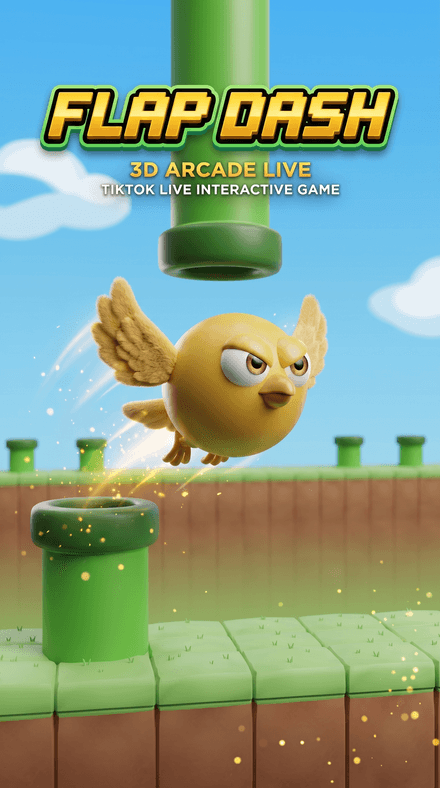 Flap DashVola entre les canonades i agafa les monedes en un món 3D — cada canonada, moneda i objectiu es valida al servidor.


